VIRGILI STUDIO

Fashion Creative Direction, Product Development, Manufacturing and Market Readiness

Model seen from behind wearing a fluorescent orange cashmere cap, charcoal tailored jacket and VIRGILI embroidery

Creative vision. Technical precision. Industrial responsibility.

The Virgili Studio Creative & Product Office (CPO) is an integrated creative direction and product development infrastructure that codifies, engineers and industrialises brand identity. We develop a vision from the ground up for newly established brands; for heritage houses, we reassess, protect and reinvigorate their historical legacy. We oversee the entire value chain, from aesthetic research and trend forecasting to collection architecture, from technical development (tech packs, BOMs, fitting and grading) to sourcing and manufacturing governance, through to market readiness and go-to-market execution.

We operate across diverse product and market segments, from Haute Luxury and Ready-to-Wear (RTW) to Contemporary and Performance Technical Wear, translating creative vision into product ready for global markets. Our structure comprises four integrated departments (Creative, Technical, Industrial and Commercial), which can be engaged across the full cycle or for an individual function.

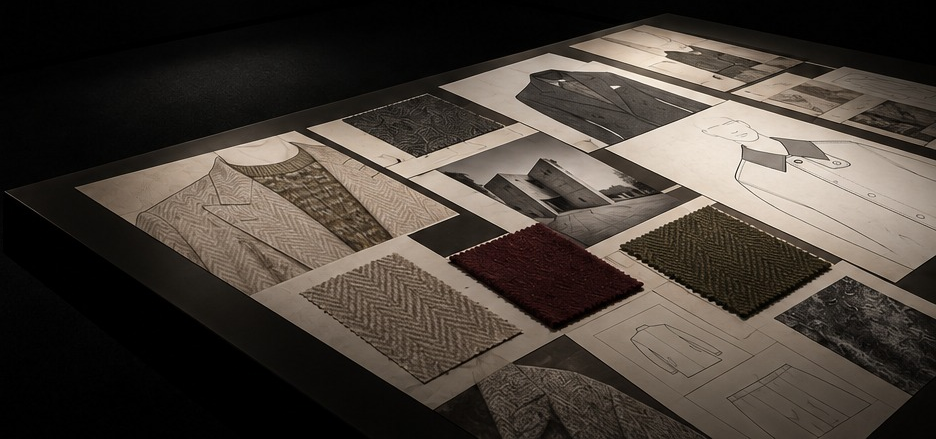
Virgili Studio worktable with collection sketches, technical drawings and fabric samples
Three fashion figures and sketches, with the full trench coat on the right, displayed against a black wall

Areas of operation: product worlds and brand DNA

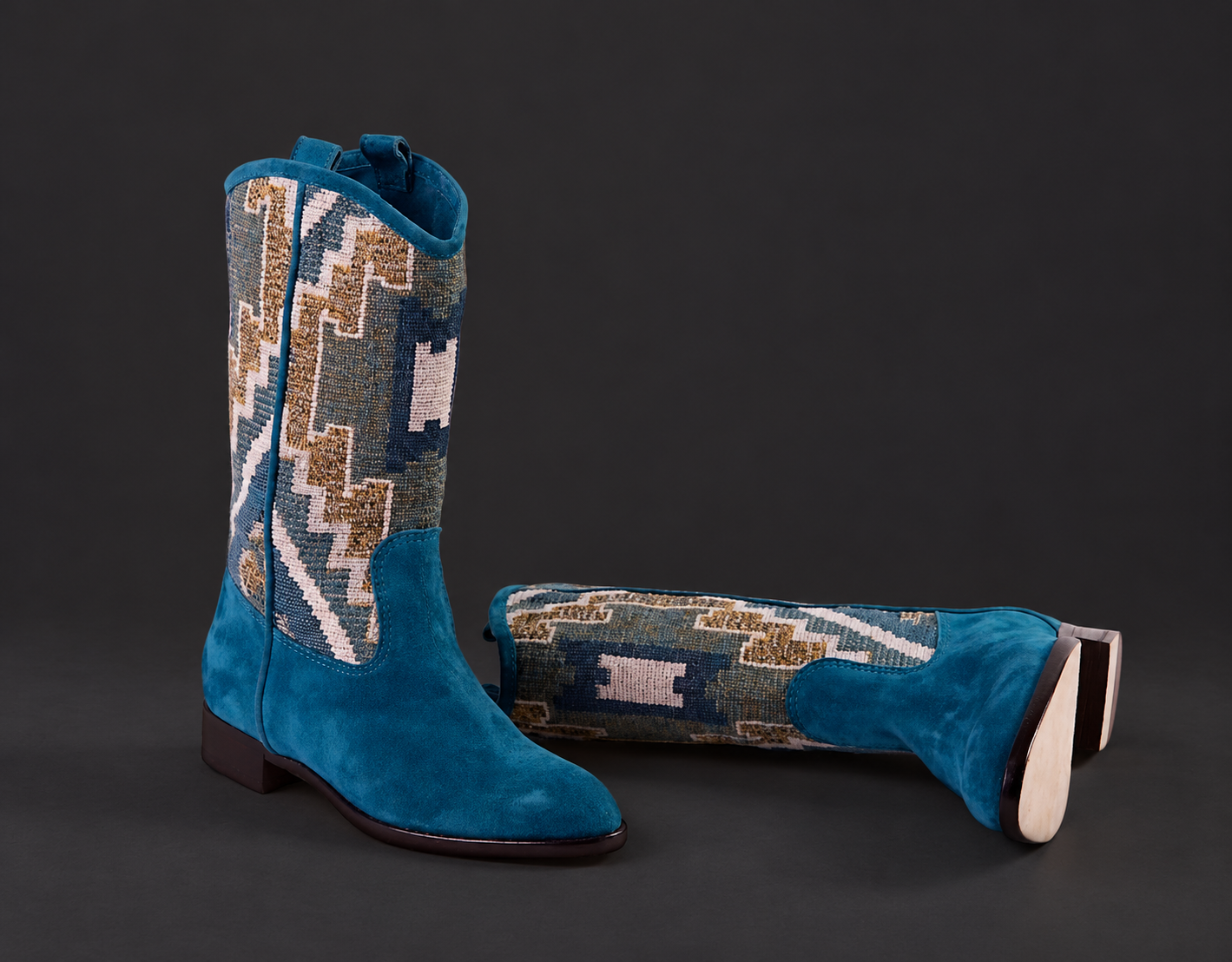
Turquoise tailored boots with textile inserts against a charcoal background

• Multi-category governance.

Parallel development of menswear, womenswear, unisex, footwear, leather goods and accessories within a single collection framework, with aligned calendars and codes.

• High luxury and Ready-to-Wear (RTW).

Atelier finishes, traditional tailoring techniques and fine materials, managed to tolerances and standards appropriate to high-end positioning.

• Contemporary and urban framework.

Visually distinctive collections engineered from the design stage to maximise margin and ensure scalability across wholesale and retail channels.

• Activewear and Technical Performance.

Ski, mountain and performance wear: technical oversight of seam sealing, membranes, laminates, PFAS-free durable water-repellent (DWR) treatments and functional testing.

• Adaptive brand architecture.

Encoding and decoding aesthetic codes, defining positioning frameworks and structuring pricing architecture (entry, core and image) for global markets.

CREATIVE DEPARTMENT

Virgili Studio blue pyjamas in motion by the sea

Language precedes the object. Observe. Interpret. Give form.

The Creative Department is the entry point to the product cycle: where language precedes and defines the object. It brings together, under one creative direction, three stages the market tends to separate: cultural and market research, the codification of identity and design, and the economic architecture of the collection.

The principle is to reduce uncertainty before it becomes an industrial cost: every aesthetic decision is assessed from the outset for material feasibility, target costing and commercial role. The output is an approved collection plan, which becomes the operational and financial framework for technical development and sourcing.
Working Outputs

  • Creative Research & Trend Direction
  • Material Direction & Concept Boards
  • Competitive Benchmark & Brand Audit
  • Product Codes & Archive Review
  • Moodboards, Colour Palettes & Original Design
  • Collection & Range Plan (with Merchandising Grid)
  • SKU & Colourway Architecture
  • Price Architecture & Target Costing

Areas of expertise

RESEARCH

  • Trend research and forecasting: Structured analysis of socio-cultural, consumer, material and textile-innovation signals, translated into actionable seasonal directions: what to develop, over what timeframe and for which target customer.
  • Market research and competitive benchmarking: Competitor analysis by category, price tier and channel; price ladders and positioning maps; whitespace analysis, consumer insights and brand audits.
  • Material direction: Conceptual material boards and direction for yarns, fabrics, leathers and finishes; development of bespoke materials with textile mills, spinners and tanneries.
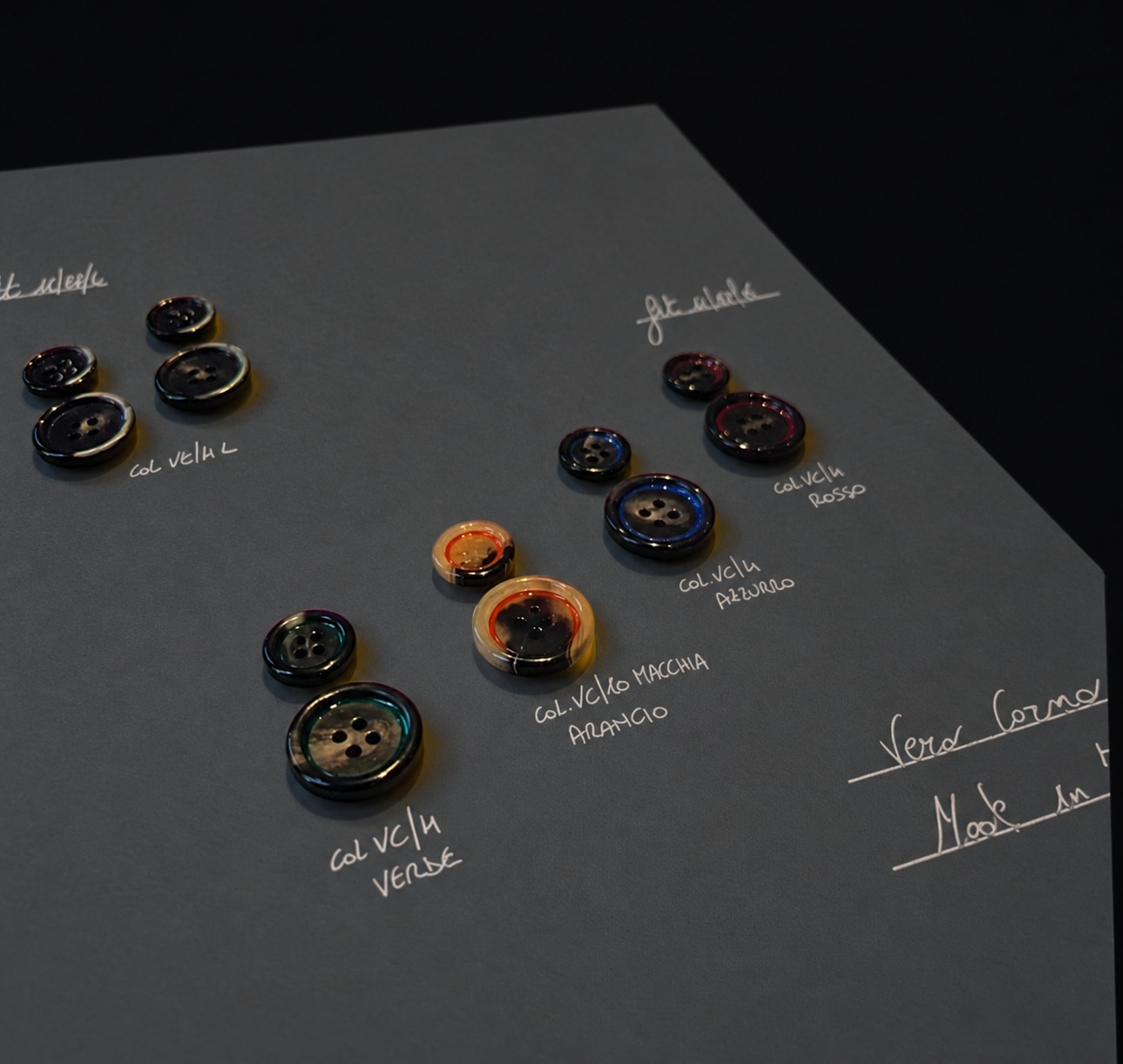
Button sample board on charcoal paperBUTTON STUDY
Blue velvet jacket with tailoring basting detailsTAILORING
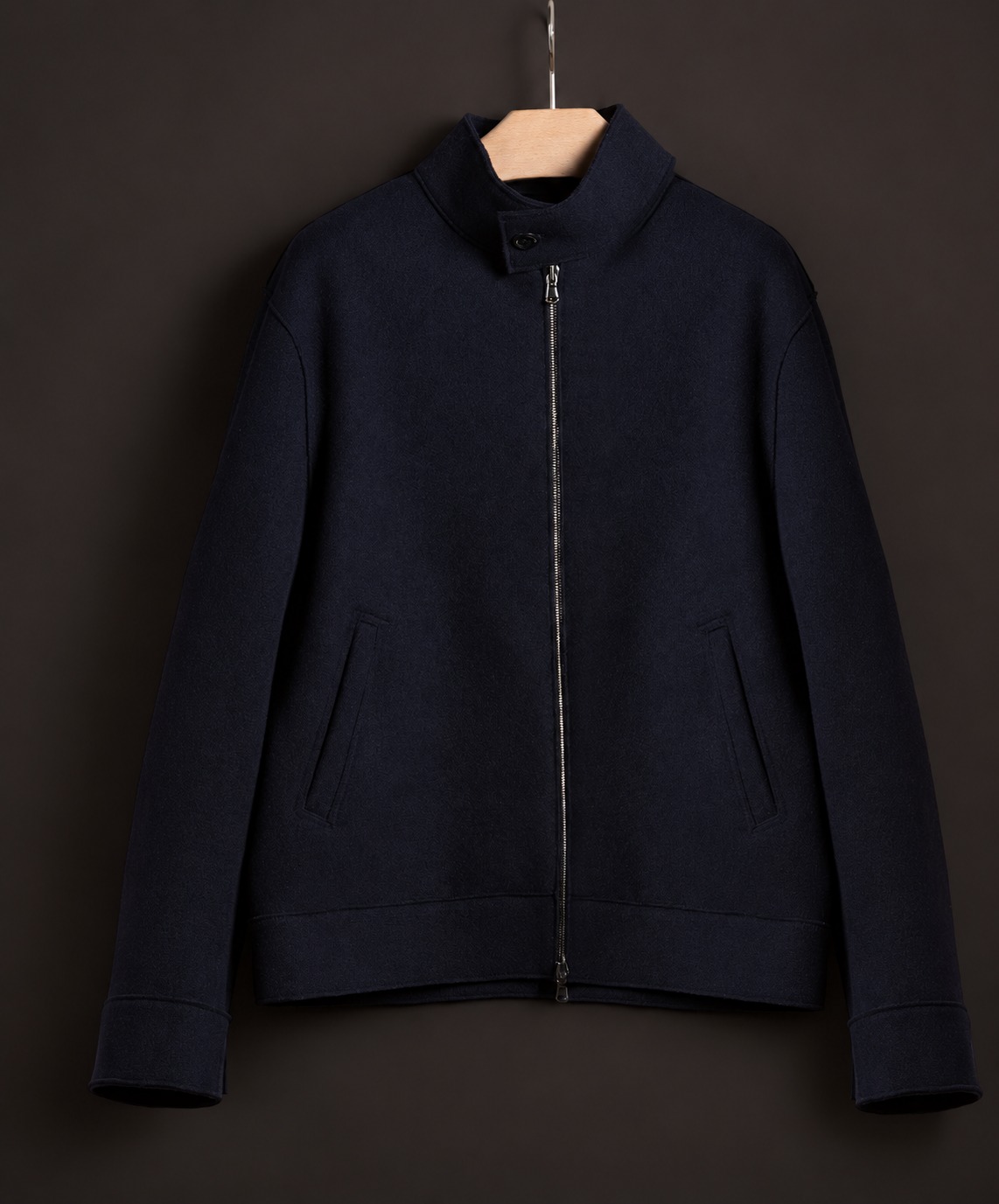
Full-length photograph of a midnight-blue bomber jacket on a hangerKNITWEAR
Textile samples and colour cards for material researchCOLOUR & MATERIAL

CODES

  • Brand strategy and positioning: Definition of the brand platform (vision, positioning, target audience, brand and range architecture) for new brands and relaunches: the strategic framework from which the codes and collection are developed.
  • Brand DNA and product codes: Reading, protecting and reinterpreting the historical archive, or defining distinctive signatures and recurring visual constants.
  • Visual identity systems (VIS): A recognisable system of geometry, variations, patterns and rules of application, maintaining consistency across scales, media and materials, from product to communication.
  • Moodboards and concept design: Seasonal concepts, proprietary colour palettes (Pantone TCX/TPG) and collection guidelines.
  • Original sketches and silhouettes: Freehand sketches and flat technical drawings defining proportions, primary volumes and the character of the garments.
  • Graphics and prints: Proprietary graphics, all-over patterns, embroidery and jacquards engineered within the constraints of industrial textile production.
  • Identity laboratory: Formal studies of folds, openings, geometries and textile rhythms, explored as possible origins of a product code.

From gesture to signature.

Identity. Codes. Signature.

COLLECTION

Zeitgeist. Read the spirit of the times, then design what comes next.

  • Line planning and SKU planning: Collection planning (range plan) and merchandising-grid structure based on target prices, margin flows and the breadth of colour variants; quantities sized against expected sell-through, in line with the EU ban on the destruction of unsold goods.
  • Collection structure strategy: Balancing and weighting statement pieces (showpieces), continuity products (core/carry-over) and entry-price structures or capsule drops.
  • Colour and textile narrative: Developing colour plans by category and mapping colourway architecture to ensure coherent visual flows across drops and delivery windows.
  • Pricing architecture and target costing: Price corridors by market, target landed costs by region, and the effects of exchange rates and duties: the approved plan forms the economic constraint for technical development.
Menswear fashion illustration: pale-blue double-breasted suit, blue polo shirt and fluid trousers
Menswear fashion illustration: beige herringbone double-breasted suit with olive-green knitwear
Menswear fashion illustration: dark-green workwear jacket, patterned knitwear and ivory trousers
Womenswear fashion illustration: soft taupe knitwear, wraparound scarf and ivory trousers

TECHNICAL DEPARTMENT

White shirt collars, horizontal detail against dark shelving

The Technical Department is where an idea becomes feasible: technical construction makes the sketch and form achievable. It receives the approved collection and converts it into industrial specifications through a controlled process: original design → technical definition → prototyping and fit trials → industrialisation of the approved PPS (Pre-Production Sample) as the Gold Sample, the definitive approval standard before production. Every stage is documented and centralised in the PLM system, so that all departments work from one up-to-date product record.

The work is hands-on and guided by Design for Manufacturing (DFM): every detail is assessed from the outset for line assembly, material consumption and waste, because construction simplification is a primary lever of margin. Requirements vary by category: knitwear (gauge, stitch structure, yarn and finishing); tailoring and outerwear (pattern cutting, internal construction, fabrics and atelier finishes); footwear (last, upper, bottom construction and components); leather goods and accessories (construction, reinforcements and hardware); technical and active outerwear (membranes, laminates, heat-sealed seams and functional testing). The output is an approved sample and a production-ready technical dossier.

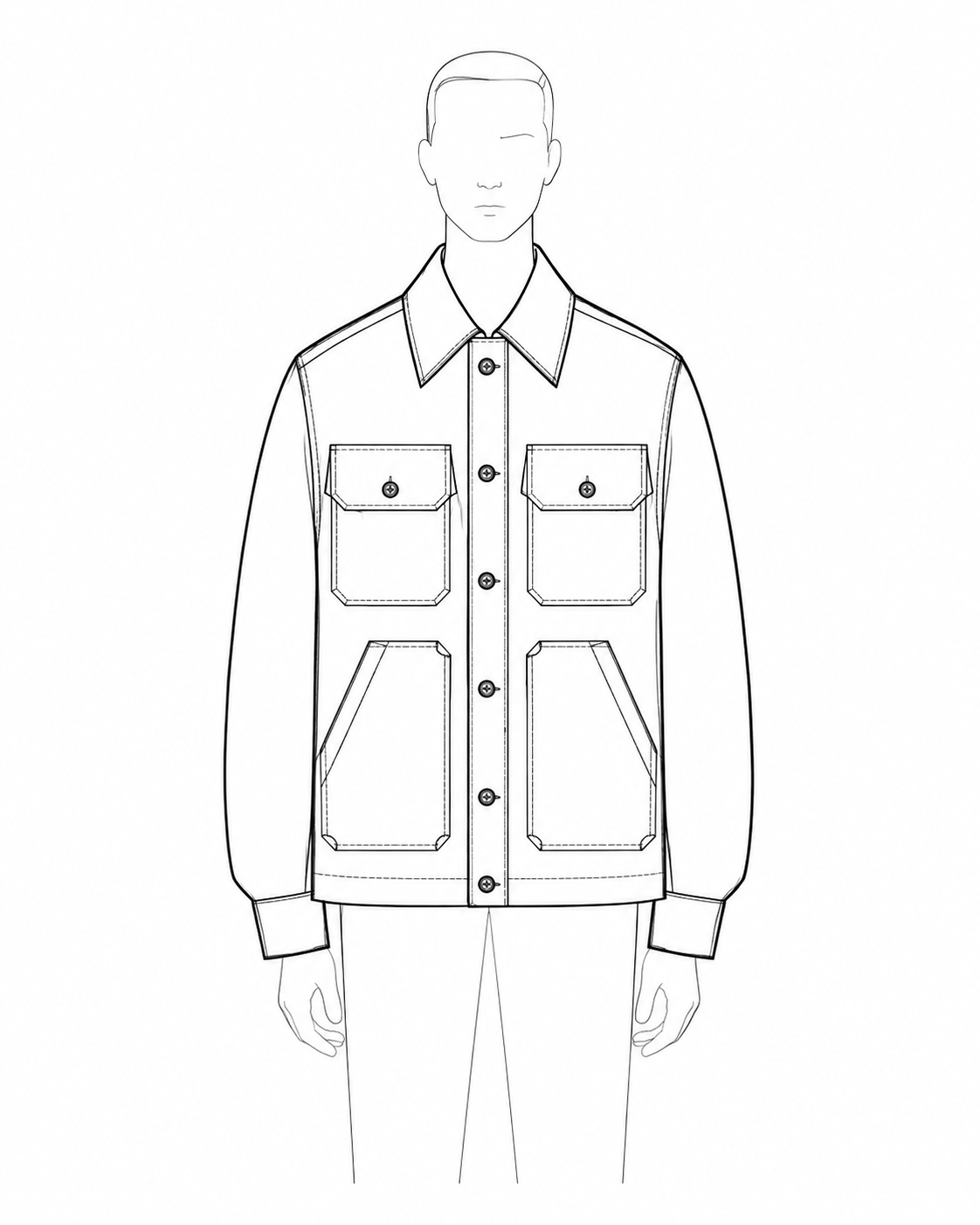
Original technical drawing of a workwear jacket

Working Outputs

  • Tech Pack & Technical Specifications
  • Bill of Materials (BOM) & Sourcing Matrix
  • Product Lifecycle Management (PLM) Data Sheets
  • Fit Comments & Pattern Corrections
  • Grading Rules & Size Charts
  • CAD Pattern Placement & Marker Making Reports
  • Time Study & Assembly Line Workflows
  • Fabric Yield & Waste Analysis
  • Fabric Shrinkage & Material Test Reports
  • Gold Sample (Approved PPS): binding input for the Industrial Department.
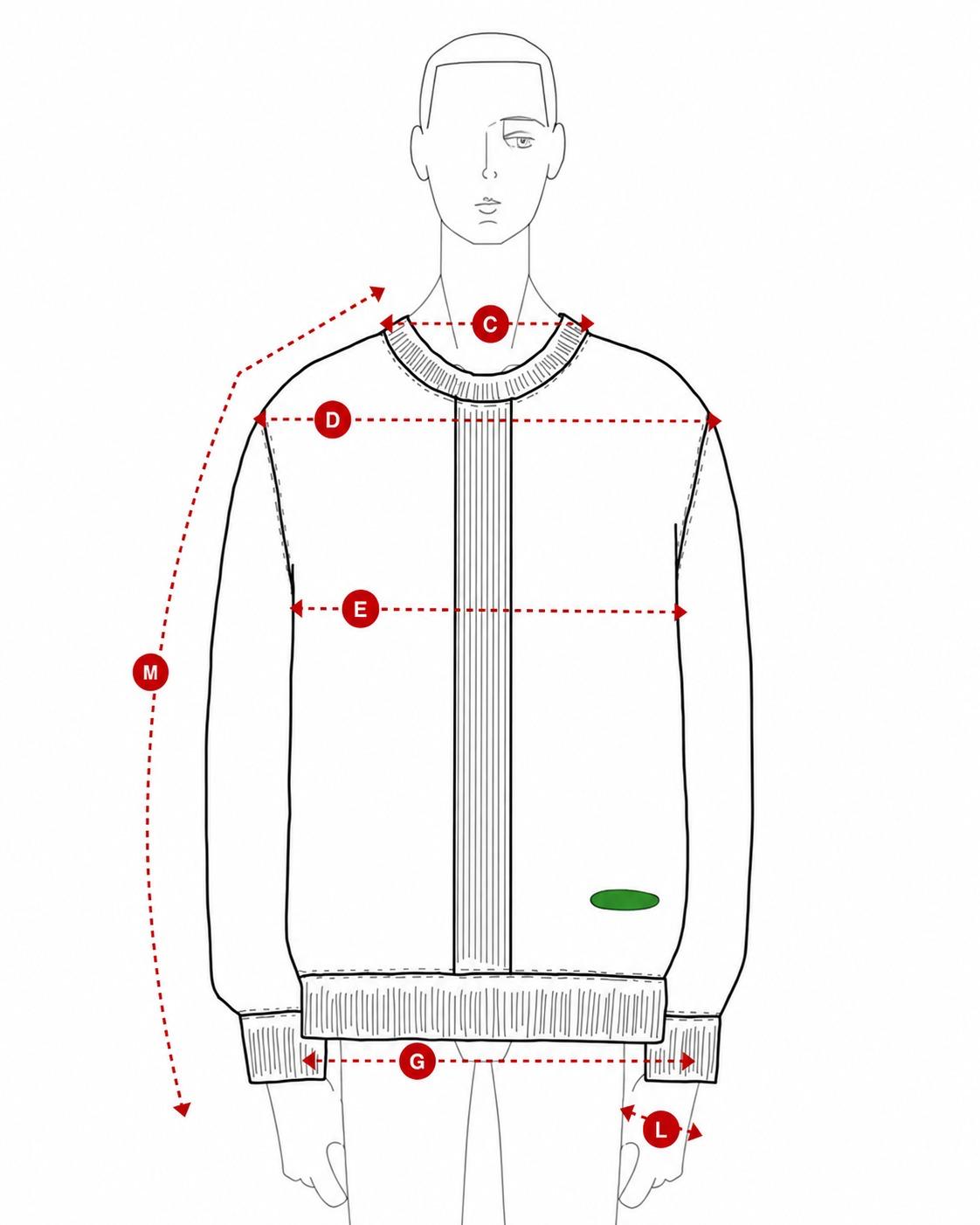
Fit study with points of measure and tolerances

Areas of expertise

  • Technical specification sheets (tech packs): Industrial specifications with measurement charts, tolerances, seam types, finishes and points of measure (POM).
  • Bill of Materials (BOM): Every component mapped to consumption and supplier: fabrics, linings, yarns, trims, labels and packaging.
  • Fitting and fit corrections: Fit sessions and corrective fitting to calibrate volumes, ease and movement; changes documented in the system.
  • Size ranges and grading: Base pattern geometry and industrial grading rules to maintain consistent fit across the full size range.
  • Industrialisation and production simplification: Adapting complex details to standardised line assembly without compromising the design, through time studies and production-cycle optimisation.
  • Fabric testing and shrinkage: Washing and thermal treatments, with construction or pattern adjustments before industrial cutting.
  • Consumption, marker efficiency and fabric yield: Optimising CAD marker layouts and marker making to maximise fabric yield per garment and minimise cutting waste.
  • Sampling by stage: Controlled progression through Proto → Fit → SMS (Salesman Sample) → PPS (Pre-Production Sample) → TOP (Top of Production), with integrated, structured comments.

INDUSTRIAL DEPARTMENT

Craftworkers’ hands working on and inspecting fabric during manufacture

The Industrial Department takes the product from specification to production. It identifies, qualifies and governs the manufacturing network, allocating orders according to production capability and mitigating operational risk. Geography follows industrial expertise: product form and complexity, volumes and scalability, product model, economics and timing, quality and control, and documentation and risk are the six dimensions used to decide where production should take place.

Working Outputs

  • Vendor Matrix & Capacity Allocation Charts
  • Industrial Costing Sheets (CMT / FOB / Landed Cost)
  • Time & Action (T&A) Calendars & Tracking Reports
  • Supply Chain Mapping & Subcontractor Audit Files
  • Material Sustainability & Certification Logs
  • Chemical Compliance Reports (REACH / RSL)
  • Trade Compliance & Customs Classification Dossiers
  • Quality Control Protocols & AQL Inspection Reports

Route A / Made in Italy

The prestige of craftsmanship

Choosing this route places the collection within a manufacturing heritage recognised internationally for excellence, expertise and prestige. The Made in Italy route encompasses high-end production, both artisanal and industrial, distinguished in the market by attention to detail and a superior level of service.

To protect the client's premium positioning, Virgili Studio oversees supply-chain traceability through a system of mapping, verification and documentation of every outsourced process, down to the actual subcontractor performing the work.

Route B / International

Efficiency and competitiveness at scale

This option addresses industrial requirements centred on high volumes, cost optimisation and global production capacity. It is the preferred route for market segments requiring a competitive target price while maintaining rigorous technical control.

Virgili Studio selects and manages overseas manufacturing partners through structured qualification, monitoring and validation processes, from sampling through to pre-production. With flexible operating models (from specialist outsourcing and CMT to Full Package), every parameter — production capacity, volumes, MOQ, lead times and cost structure — is calibrated to the project's objectives, ensuring alignment between quality, competitiveness and industrial performance.

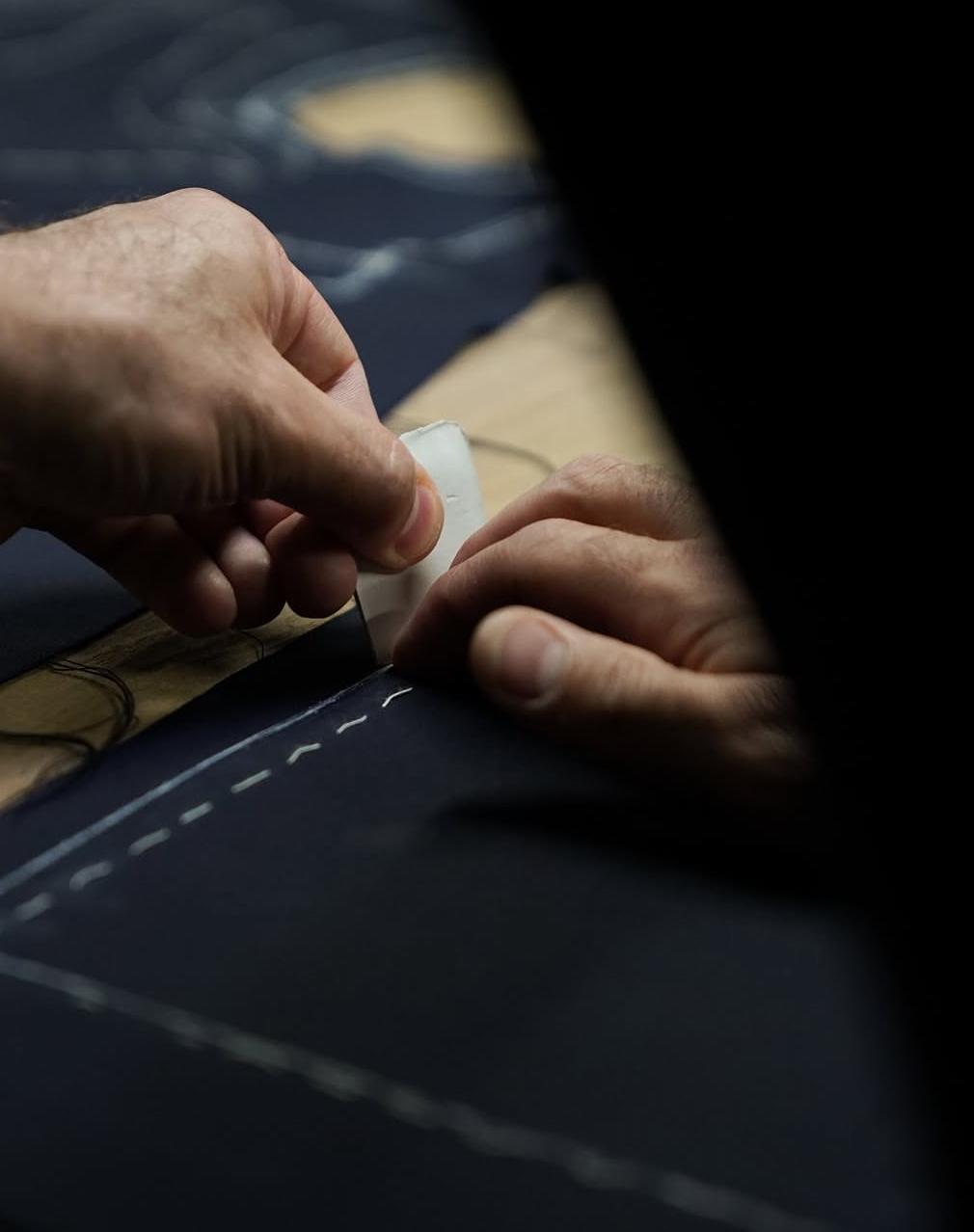
Craftworkers’ hands marking and checking fabric during garment making
Close-up of machine stitching and fabric handling
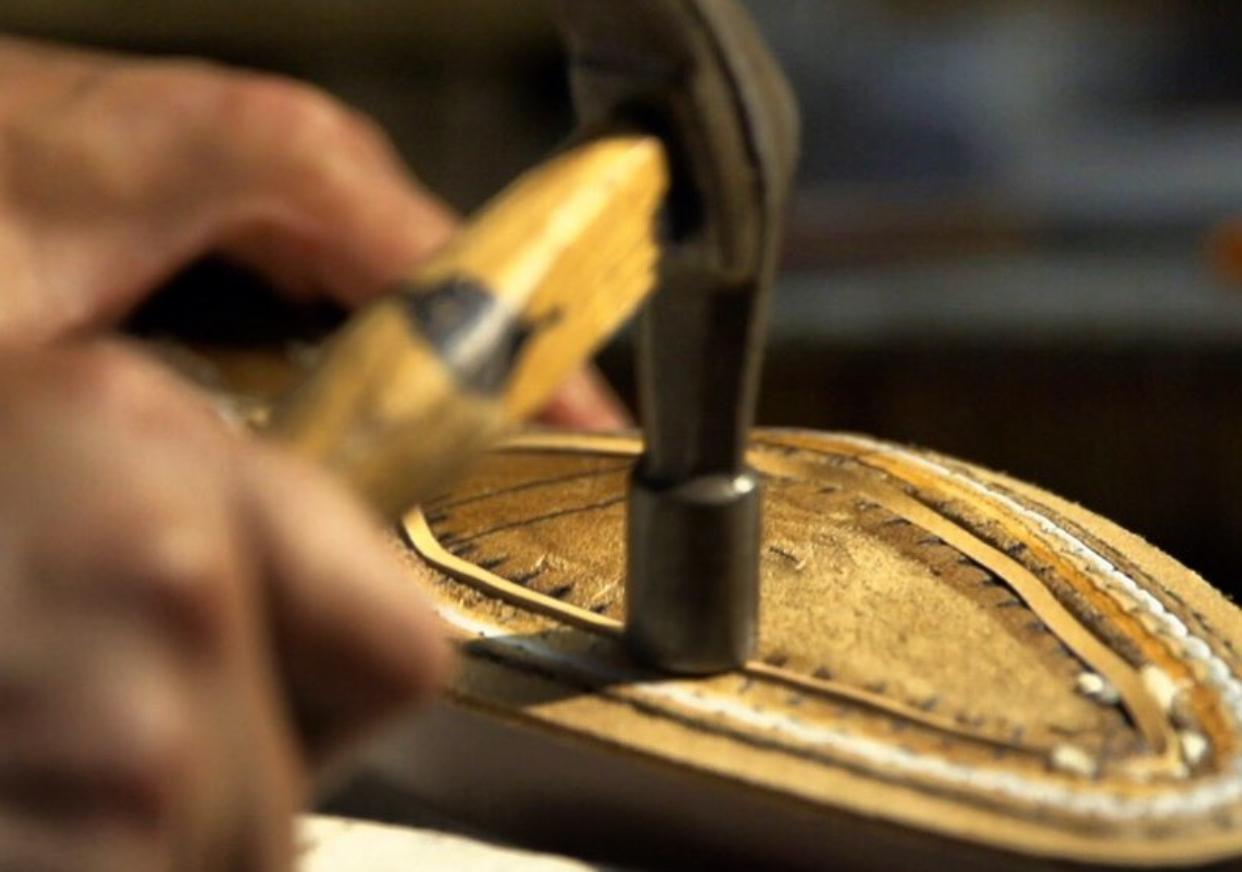
Artisanal shoemaking with hammer and sole

Areas of expertise

  • Material research and procurement: Global supplier scouting and strategic procurement of yarns, fabrics, finishes, leathers and metal hardware in accordance with the approved material direction.
  • Certifications and supply-chain traceability: Management of international standards (GOTS, GRS, OCS, RWS, OEKO-TEX and LWG for leather) to support the brand's social and environmental compliance.
  • Digital Product Passport (DPP) readiness: Structuring traceability data to prepare the product for requirements under the Ecodesign for Sustainable Products Regulation (ESPR).
  • Vendor matrix and capacity allocation: Building, qualifying and monitoring an international network of workshops and contract manufacturers, with volumes allocated by technical specialism and lead time.
  • Industrial costing (CMT / FOB / DAP / DDP): Breaking down and negotiating Cut, Make and Trim (CMT), finished-goods and logistics costs through to landed cost, in order to protect gross margin.
  • Subcontracting, audits and risk management: Verification and mapping down to the actual subcontractor (authorisations, Italian DURC contribution-compliance certificates and on-site audits), supporting the client's organisational model under Italian Legislative Decree 231/2001; ethical and technical audits aligned with the EU Forced Labour Regulation.
  • Chemical compliance (REACH, CLP, RSL/MRSL): Laboratory testing of materials and components to exclude substances subject to international restrictions.
  • Lead times and T&A tracking: Managing Time & Action schedules and triggering early warnings to meet warehouse delivery windows.
  • Trade compliance: Tariff classification (HS, CN, TARIC, HTS), customs origin and validation of “Made in” claims to assess the correct impact of duties.
  • Packaging and trim engineering: Engineering swing tags, boxes, dust bags and protective systems suitable for global logistics, e-commerce and EU packaging requirements.
  • Quality control and AQL: Preparing inspection specifications and planning in-line and final (pre-shipment) inspections under AQL statistical sampling plans (ISO 2859-1).

COMMERCIAL DEPARTMENT

Three full-length mannequins: tailored outerwear, double-breasted suit and Ski & Mountain

The Commercial Department completes the product cycle: it brings the approved collection to customers, channels and delivery, managing the transition from manufacturing to market. A sample alone is not enough: the offer must be intelligible to professional buyers and sustainable for the company's margins. The department governs four dimensions: assortment (category roles, collection and merchandising plans, SKUs), economics (costs, price lists and margins), sales preparation (wholesale, showroom and direct channels) and data implementation (launch, order book and allocation of inbound stock).

It translates product decisions into operational tools for sales networks and international buyers — sample collections, line sheets, pricing grids and channel data — applying a final gate to verify that every outgoing batch is consistent in aesthetics, statutory labelling and logistics. The output is a collection ready for sale and delivery across global markets.

Working Outputs

  • Line Sheet & Wholesale Catalogues
  • Price Grids & Currency Matrices
  • Order Book & Pre-Order Layouts
  • Retailer & Marketplace Compliance Packs (EDI/RFID)
  • Product Bible & Sales Force Guidelines
  • Launch Gate Report & Compliance Dossiers

Areas of expertise

  • Sample collection logistics: Coordinating and monitoring the timing and movement of final commercial sample collections (SMS) for showrooms, fashion shows and sales campaigns.
  • Commercial mapping and drop planning: Defining buying packages by product category, geographical stock allocation and planning global sales drops.
  • Buyer tools: Preparing detailed line sheets and wholesale catalogues by SKU variant, multi-tier pricing matrices by market (retail, wholesale and duty-free), and minimum order quantities (MOQs).
  • Sell-in and order book management: Managing the pre-collection, showroom and international trade-fair calendar, configuring B2B platforms and consolidating order forecasts.
  • Retailer and marketplace compliance: Meeting department-store and marketplace logistics and IT requirements: labelling, GS1 standards, EDI/ASN protocols, RFID and routing guides.
  • Direct-to-consumer (DTC) readiness: Structuring product data for PIM systems, size charts and fit specifications to reduce returns, and digital assets and 3D models for direct channels.
  • Product training: Preparing the product bible and technical guidelines for the sales force, turning supply-chain complexity into compelling commercial narratives.
  • Market launch validation: Completing the final approval gate for aesthetic, legal (composition and care labelling) and logistics compliance before market release.
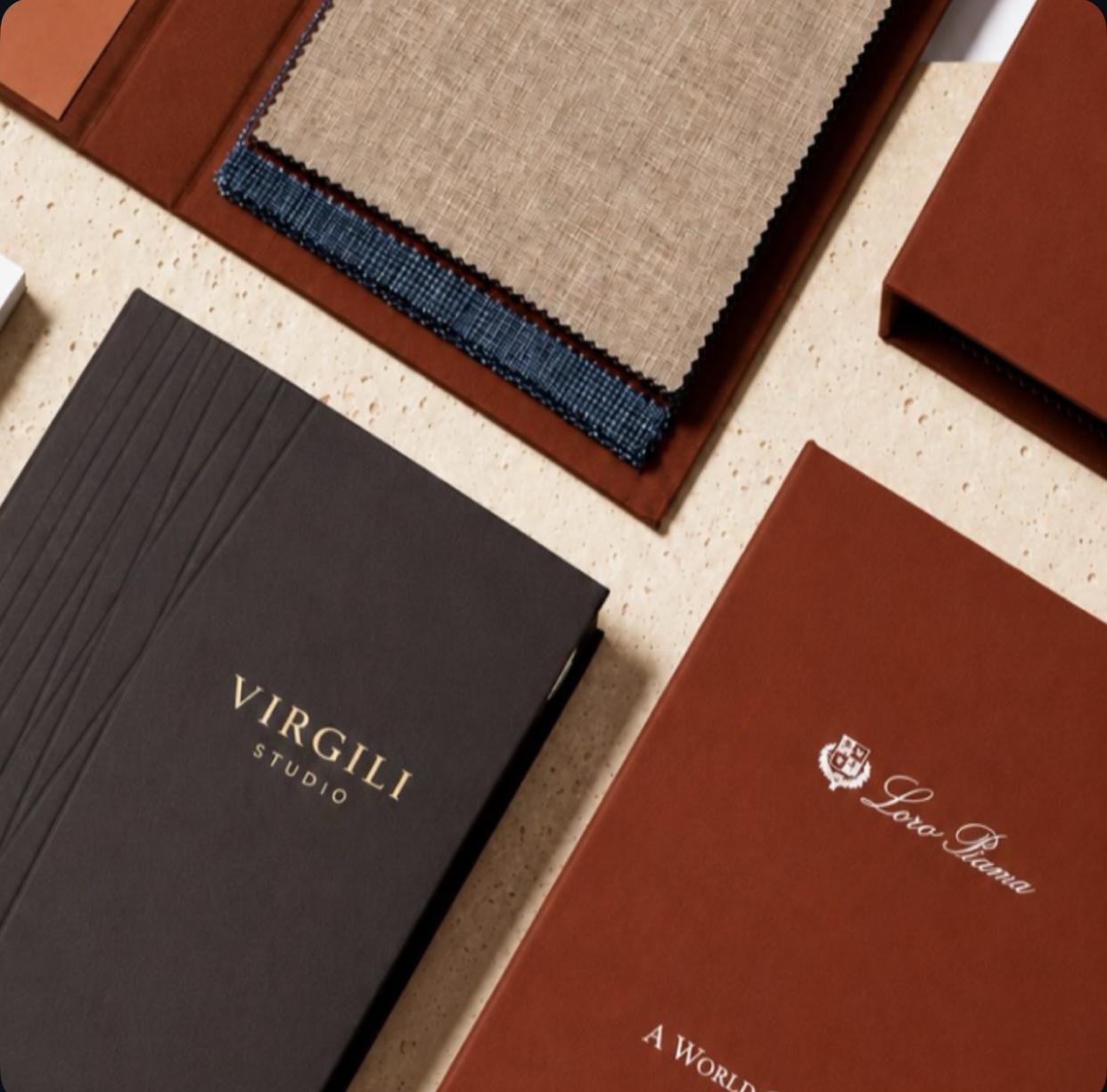
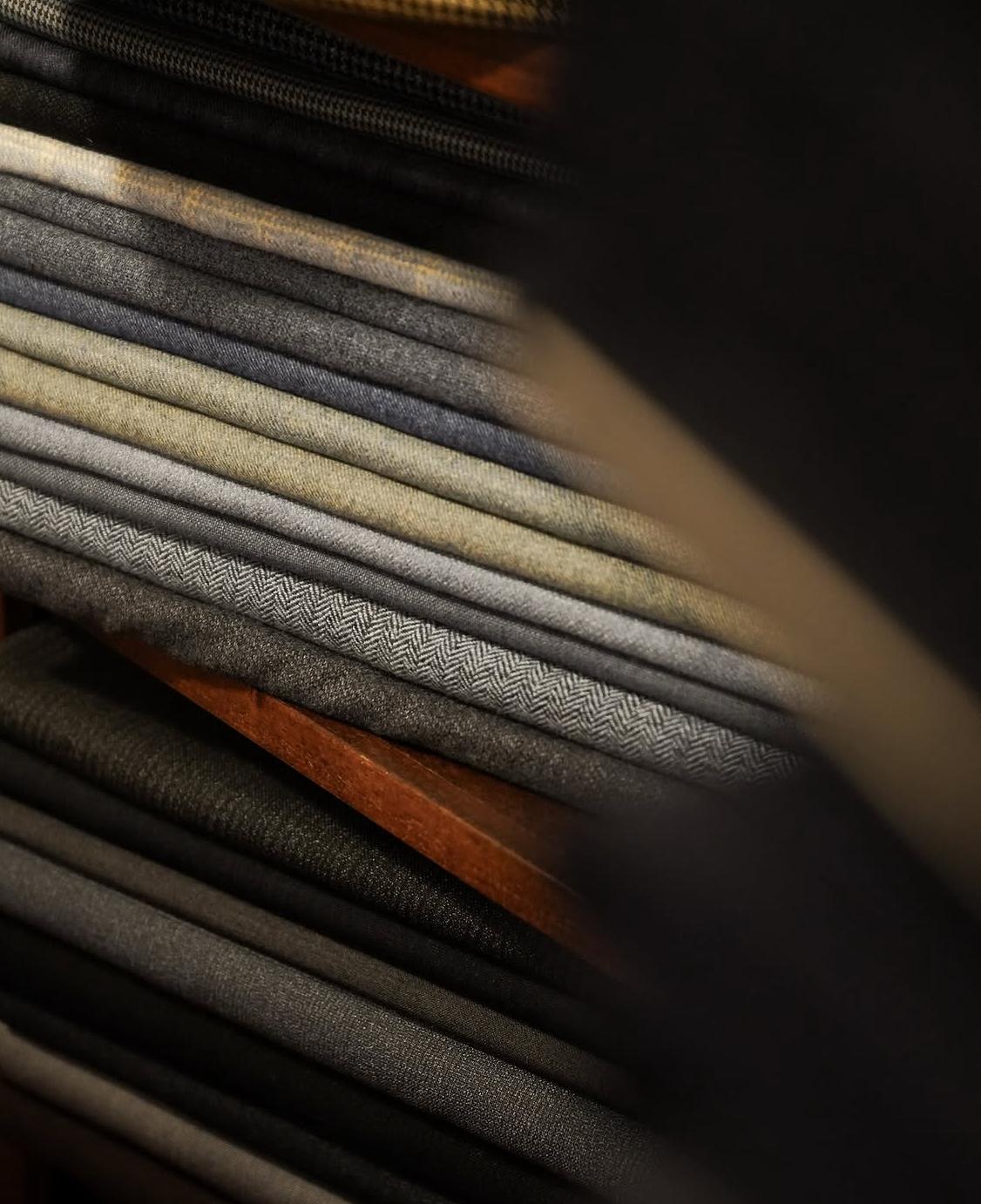
Fabric library and sample books for material selection

Decision-making infrastructure
and applied technology

Governed Intelligence Connected Work Human Authority

Virgili Studio's technology acts as a cross-functional governance layer for the CPO: it connects information and processes across all four departments within a shared data model — design, Bill of Materials (BOM), SKUs, supply chain and logistics. Costs, margins, timelines and commercial documentation can therefore be updated in a coordinated and traceable manner, according to the integrations active for each mandate.

The model follows a recursive, stage-governed flow (Governed Flow). Artificial intelligence acts as an assistive accelerator, flagging conflicts, missing information and possible scenarios. Creative direction, strategic validation and decision-making authority remain explicitly and ultimately human (Human Authority).

CONNECTConnected sources
STRUCTUREEvidence and relationships
CHALLENGEGaps, conflicts and assumptions
PREPAREAI-assisted analysis
GOVERNHuman validation
REMEMBERInstitutional memory

Predictive mapping Research & Assessment

Clustering trend signals, competitive benchmarks, consumer behaviour, materials and colour to accelerate research and the development of conceptual frameworks.

Virtual sampling Product & PLM

Visual simulations of looks, layering and contrasts between fine fibres and technical shells before sourcing and sampling; fit and feasibility remain subject to physical verification.

Financial engineering and compliance Decision & Portfolio

Preliminary BOM-based costing, price and duty scenarios by market, early warnings for Time & Action (T&A) schedules, and structured data for traceability and compliance.

Decisions, responsibilities and evidence feed a permanent, verifiable institutional memory, protecting the continuity of the project and the client's value chain.

The stage-gate method and critical path

Every collection follows a schedule of mandatory approval gates governing the flow: Concept → Design Freeze → Tech Pack Freeze → Sampling (Proto, Fit, SMS, PPS) → Commercial Approval → Production Orders → TOP → Dispatch. Each department's output becomes the binding input for the next: no stage begins until the preceding stage has been formally closed and documented in the system.

Product financial engineering

A continuous loop aligns Target Costing, Industrial Costing and Margin. Target price, actual cost and gross margin remain under control from concept to delivery, with early warnings for every variance during development and production.

Defined scope. Verifiable outcomes.

We intervene where needed, with a defined scope and clear decision-making responsibilities. Scope, deliverables and timelines are agreed before work begins.

Component and stage

a single original design, a material study, a specialist prototype or a fit correction.

Function

targeted specialist expertise within an existing team (creative direction, product development, procurement, production control or commercial preparation).

Project

a capsule collection, limited series, new product category or seasonal collection.

Extended mandate

shared responsibility across several stages of the cycle, with leadership roles embedded in the client's organisation where contractually agreed.

Starting point

an initial product audit of the collection, costs and supply chain to identify risks, operational priorities and immediate actions.

The international governance model

Governance and arbitration

In multi-function mandates, conflicts between aesthetic ambition and budgetary or feasibility constraints are managed through a structured arbitration matrix within the system. No department may unilaterally change product specifications without the formal, shared approval of the others. If a technical change intended to optimise costs or cutting layouts risks compromising visual impact, silhouette or brand identity, final arbitration rests with the client's designated leadership role (Merchandising Director or Brand Director). In this way, manufacturing efficiency and margins remain balanced with desirability, quality and perceived brand value.

FROM VISION
TO EXECUTION

One direction to transform identity, product and manufacturing capability into a system ready for market.

LET'S START A PROJECT
VIRGILI STUDIO
Brand · Product · Organisation · Markets · CapitalMilan · European Unioninfo@virgiliconsulting.com
LinkedIn Instagram
Business & Industry News